

 Informationen
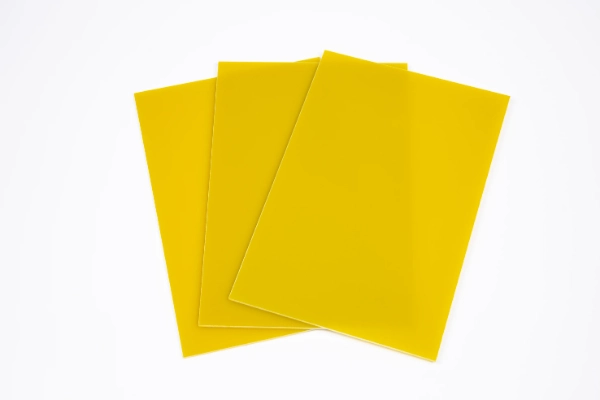
G11 epoxy glass sheet is a high-performance thermoset laminate composed of an epoxy resin matrix reinforced with woven glass cloth. Renowned for its outstanding mechanical strength, electrical insulation, thermal resistance, and flame retardance, G11 is a superior material for demanding applications. Its ability to perform in high-temperature and high-voltage environments makes it a preferred choice in the instrumentation field. In this blog post, Blue Sun, a high performance epoxy resin laminate manufacturer, will share the applications of G11 epoxy glass sheet in instruments.
Overview of G11 Epoxy Glass Sheet Properties
G11 epoxy glass sheet belongs to the NEMA (National Electrical Manufacturers Association) family of industrial laminates, classified under the G-series for glass-based laminates. It shares similarities with G10, another commonly used epoxy laminate, but offers enhanced thermal resistance, often tolerating continuous use temperatures above 180°C.
Key characteristics include:
- High dielectric strength
- Excellent dimensional stability
- High mechanical strength at elevated temperatures
- Superior chemical resistance
- Low moisture absorption
- Self-extinguishing (UL 94 V-0 rating)
These attributes make G11 epoxy glass sheets ideal for instrument applications that demand insulation, structural stability, and heat tolerance.
Applications of G11 Epoxy Glass Sheet in Electrical Measuring Instruments
One of the most prominent uses of G11 epoxy glass sheet is in electrical measuring instruments, such as multimeters, oscilloscopes, current transformers, and high-voltage testers.
1. Insulation Boards and Mounting Plates
G11 sheets are widely used as insulation boards within electrical instruments, separating and supporting internal components. Their high dielectric strength ensures safety and prevents arc faults, especially under high-voltage operation.
2. Component Mounts for Stability Under Load
Instruments that experience mechanical or vibrational stress use G11 as a mounting substrate for relays, terminals, or sensors. The material's rigidity ensures positional accuracy and vibration dampening, enhancing instrument reliability and longevity.
3. Printed Circuit Board (PCB) Substrate in Specialized Cases
While FR4 is common in general PCBs, G11 is used in high-performance or high-temperature applications where thermal stress could degrade standard substrates. Its excellent insulation and mechanical integrity ensure that signal transmission and measurement accuracy are preserved.
Applications of G11 Epoxy Glass Sheet in Temperature and Pressure Instruments
G11 epoxy glass sheet is also employed in instruments exposed to thermal and mechanical extremes, such as industrial thermometers, manometers, and pressure sensors.
1. Thermal Barrier Components
Due to its high glass transition temperature, G11 is used in components where thermal separation is necessary, such as between sensor elements and signal processing electronics. This prevents heat-induced signal distortion and ensures measurement accuracy.
2. Structural Frames and Casings
For portable and field instruments, G11 provides a durable yet lightweight housing material. It maintains mechanical integrity in both high- and low-temperature environments and offers protection from impact and chemical exposure.
Applications of G11 Epoxy Glass Sheet in Optical and Laboratory Instruments
In precision instruments used in laboratories and optical applications, G11 plays a role where electrical insulation, dimensional stability, and low outgassing are essential.
1. Mounting and Isolation Fixtures
In spectrometers, microscopes, and analytical equipment, G11 sheets are used for internal mounting plates, spacers, and isolation blocks. These maintain alignment and support delicate components while avoiding electrical interference or thermal expansion that could skew readings.
2. Substrates in High-Vacuum Applications
G11 has low outgassing properties, making it suitable for high-vacuum environments. It can be found in instruments used in semiconductor analysis or space simulation chambers where materials must not contaminate the vacuum environment.
Applications of G11 Epoxy Glass Sheet in Medical and Diagnostic Instruments
In the medical field, electronic diagnostic tools must meet stringent safety and performance standards. G11 epoxy glass sheet supports these instruments by offering high insulation and flame resistance.
1. Internal Electrical Barriers
Devices like ECG machines, infusion pumps, and patient monitors use G11 barriers between power circuits and patient-contact interfaces, ensuring electrical isolation and reducing risk of leakage currents.
2. Support for Embedded Components
G11 is used to fabricate structural components that hold transformers, resistors, and coils within compact diagnostic devices, maintaining internal order and enhancing product safety.
Advanced Instrumentation and Aerospace Applications
Instrumentation in aerospace, defense, and high-energy physics requires materials that combine strength, heat resistance, and electrical insulation.
1. Sensor Support Structures
In avionics and aerospace sensors, G11 sheets are used to support sensing elements and maintain spatial accuracy despite temperature changes and mechanical stress during flight or launch.
2. Test Equipment for Harsh Environments
G11 is often integrated into test rigs and instrumentation used in extreme testing environments (e.g., engine test stands or electromagnetic compatibility testing), where both structural performance and insulation are critical.
Conclusion
G11 epoxy glass sheet has earned a solid reputation across a broad spectrum of instrument applications, from precision laboratory equipment to high-voltage electrical testers and aerospace sensors. Its exceptional combination of mechanical strength, thermal stability, and electrical insulation makes it an indispensable material in modern instrumentation design and manufacturing. As instruments continue to evolve toward greater precision and miniaturization, the demand for high-performance composite materials like G11 is only expected to increase.