

 Informations
The evolution of communication equipment has paralleled the rapid advancement in high-speed electronics, signal integrity technologies, and miniaturized device integration. As communication systems—ranging from base stations to satellite transceivers and 5G routers—become increasingly sensitive to electromagnetic interference (EMI), electrostatic discharge (ESD), and thermal instability, the materials used in their construction are required to deliver exceptional mechanical, electrical, and anti-static performance. Among these, anti-static epoxy fiberglass laminate has emerged as a critical material in ensuring the safe, durable, and stable operation of modern communication equipment. In this blog post, as a high performance epoxy glass fibre sheet exporter, Blue Sun will share the application of anti-static epoxy fiberglass laminate in communication equipment.
1. Composition and Structure of Anti-Static Epoxy Fiberglass Laminate
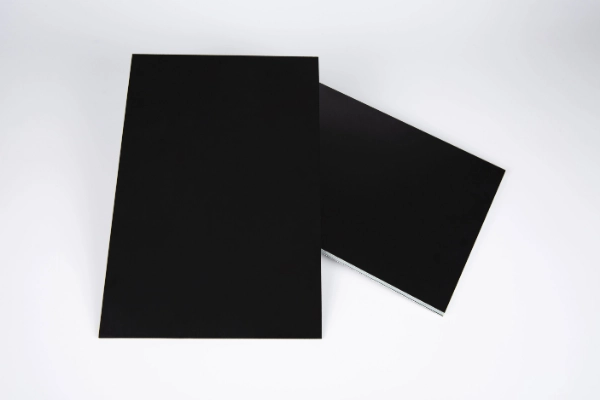
Anti-static epoxy fiberglass laminate is a composite insulating material formed by impregnating woven fiberglass cloth with an epoxy resin modified with anti-static agents, followed by hot-press curing under controlled temperature and pressure. The resulting laminate exhibits a layered structure with the following key components:
- Glass fiber substrate (E-glass): Provides high tensile strength, dimensional stability, and resistance to deformation.
- Modified epoxy resin matrix: Offers excellent dielectric properties, thermal stability, and chemical resistance.
- Anti-static additive integration: Reduces surface and volume resistivity to allow for controlled dissipation of electrostatic charges without compromising insulation.
This laminate typically meets or exceeds standards such as NEMA G10/G11, IEC 61249, and UL 94 V-0, ensuring flame retardancy and environmental resistance. The anti-static properties are usually tailored to achieve surface resistivity in the range of 10⁶–10⁹ Ω/sq and volume resistivity of 10⁷–10¹⁰ Ω·cm.
2. Technical Properties Relevant to Communication Equipment
Anti-static epoxy fiberglass laminates are characterized by a unique combination of electrical, mechanical, thermal, and anti-static properties that make them ideal for application in communication hardware:
a. Electrical Insulation Performance
- Dielectric strength: Typically above 18 kV/mm, ensuring insulation between conductive elements even under high-voltage stress.
- Low dielectric constant (Dk): Around 4.5–5.2 at 1 MHz, suitable for maintaining signal integrity in high-speed PCB substrates.
- Dielectric loss tangent (Df): Low dissipation factor (<0.03) helps minimize signal loss in RF and microwave frequency bands.
b. Electrostatic Discharge Protection
- Controlled resistivity: The integrated anti-static components prevent sudden discharge events by allowing gradual dissipation of static buildup.
- EMI shielding support: When combined with grounded conductive layers, the laminate assists in managing electromagnetic interference across enclosures and boards.
c. Mechanical Strength and Dimensional Stability
- Flexural strength: ≥350 MPa, which supports the structural integrity of circuit boards, backplanes, and housing plates.
- Compressive strength: >300 MPa, ensuring robustness against vibrations and mechanical shock during operation or transportation.
- Low coefficient of thermal expansion (CTE): Compatible with copper, reducing thermal stresses during soldering and thermal cycling.
d. Flame Retardancy and Environmental Resistance
- Flame rating: UL 94 V-0 certified, which is essential in preventing flame propagation in densely packed communication racks.
- Moisture absorption: <0.2%, enhancing reliability in humid environments or outdoor base stations.
3. Key Application Areas in Communication Equipment
a. Printed Circuit Boards (PCBs)
Anti-static epoxy fiberglass laminates are commonly used as base materials for multilayer PCBs in communication devices such as routers, switches, and RF amplifiers. Their high insulation resistance and anti-static behavior prevent signal interference and eliminate the risk of electrostatic damage to sensitive ICs and microcontrollers.
Moreover, their stable dielectric properties over a wide frequency range make them suitable for high-speed data transmission applications in 5G infrastructure and fiber-optic systems.
b. Structural Support Panels in Communication Cabinets
In base station racks, optical communication cabinets, and telecommunication shelters, the laminate is machined into panel structures and mounting plates. These components provide mechanical support and electrical isolation for modules, ensuring no static buildup leads to arc discharges across signal or power pathways.
c. Insulating Spacers and Dielectric Barriers
Anti-static laminates are often used in the form of spacers, gaskets, and insulative bushings that separate conductive paths in RF filters, antenna assemblies, and microwave transmission modules. This ensures:
- Safe operation under high-frequency AC voltages.
- Resistance to high temperature from internal heat generation.
- Protection against static buildup due to proximity with RF shielding materials.
d. Grounded Backplanes and EMI Shielding Frames
Communication systems often integrate anti-static laminate sheets as EMI containment layers, especially in backplanes that connect multiple circuit boards. In this application, the laminate acts as:
- A dielectric buffer between signal lines.
- A substrate for conductive coatings or copper layers that form part of a Faraday cage structure.
- A discharge path to chassis ground for accumulated static electricity.
e. Satellite and Aerospace Communication Modules
In satellite communication and radar systems, weight, reliability, and resistance to extreme temperatures are key. Anti-static epoxy fiberglass laminates with aerospace-grade formulations are employed in:
- Antenna positioning electronics
- Signal processing control boards
- Shielded compartments within onboard communication relays
They offer predictable behavior under high vacuum, cosmic radiation, and wide temperature swings, all while minimizing the risk of dielectric breakdown or ESD-related damage.
4. Processing and Machining Considerations
For integration into communication equipment, anti-static epoxy fiberglass laminates are supplied in sheet form (typically 1020 × 1220 mm or 1220 × 2440 mm) and can be machined into custom parts using standard CNC tools. Key machining characteristics include:
- Excellent drillability with carbide or diamond-coated bits.
- Laser and waterjet compatibility for precision cutting.
- Routing for slots and holes in modular PCB or EMI compartment designs.
- Surface preparation options for conductive plating or silk screen marking.
During processing, it is crucial to control dust and static generation as machining fiberglass can release particulate matter. Anti-static properties further assist by preventing fine dust from adhering to surfaces and contaminating electronic assemblies.
Conclusion
The role of anti-static epoxy fiberglass laminate in communication equipment is critical for ensuring both performance and longevity. As communication technologies continue advancing toward higher frequencies, tighter component density, and more compact modular designs, the demand for materials that provide electrical insulation, mechanical stability, and electrostatic control will only grow.