

 お知らせ
お知らせEpoxy glass laminates are essential materials in modern electrical and electronic industries, offering an exceptional combination of mechanical strength, electrical insulation, and thermal stability. Among the various types, the 3240 Epoxy Fiber Glass Sheet stands out for its reliability and broad application range. In this blog post, as a high performance epoxy glass cloth laminated sheet manufacturer, Blue Sun will share the application of 3240 epoxy fiber glass sheet in electrical equipment.
Understanding 3240 Epoxy Fiber Glass Sheet
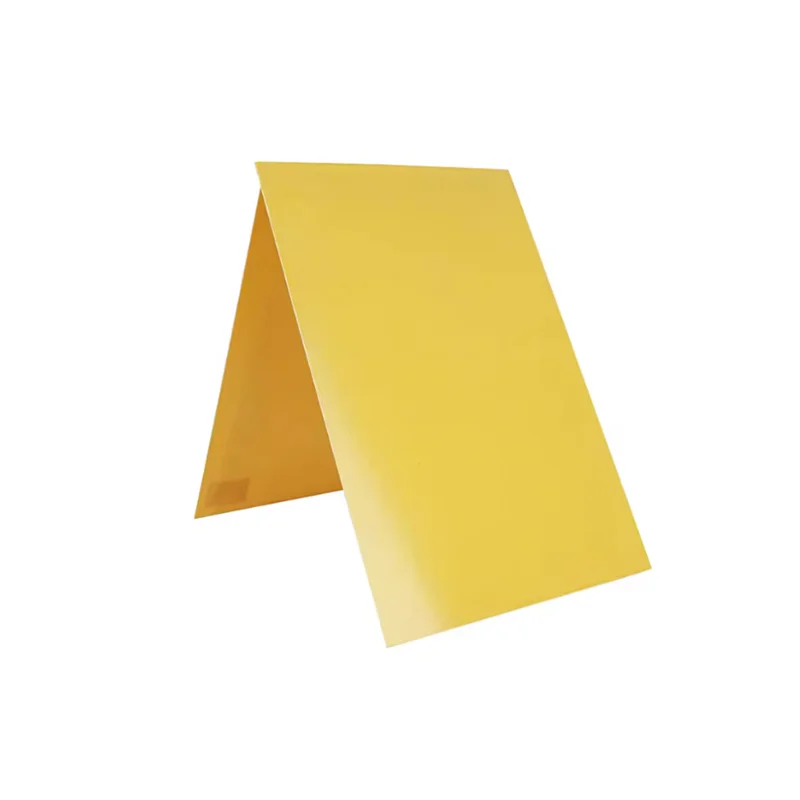
The 3240 Epoxy Fiber Glass Sheet is a composite material consisting of woven fiberglass cloth impregnated with an epoxy resin binder. It complies with the Chinese standard GB/T 1303.1-2009 and is often referenced globally for high-performance applications. These sheets are manufactured under high-temperature and high-pressure conditions, resulting in a rigid, mechanically robust, and electrically insulating product.
Key properties include:
- Excellent mechanical strength (both flexural and impact resistance)
- High dielectric strength and insulation resistance
- Good dimensional stability
- High heat resistance, typically up to 155°C (Class F)
- Resistance to moisture, chemicals, and flame propagation
These properties make 3240 epoxy sheets ideal for a wide array of electrical and electronic components.
1. Insulating Structural Components in Switchgear
Switchgear assemblies require materials that can withstand electrical stress, mechanical forces, and environmental exposure. The 3240 epoxy sheet is extensively used in the internal insulation and structural supports of low-voltage (LV) and medium-voltage (MV) switchgear systems.
Applications include:
- Insulating barriers and partitions between conductors
- Arc chutes and contact support panels
- Terminal boards and busbar support structures
The 3240 sheet' s high arc resistance and mechanical stability under thermal cycling conditions make it suitable for use in high-load switchgear, ensuring safety and operational continuity.
2. Transformer Insulation and Component Mounting
In power and distribution transformers, insulation materials must provide both electrical separation and mechanical support for windings and cores. The 3240 epoxy fiberglass sheet is used for fabricating insulation cylinders, core spacers, and mounting brackets due to its strong dielectric properties and formability.
Key roles in transformer systems:
- Barrier insulation between high- and low-voltage windings
- Mounting and clamping plates for magnetic cores
- Coil end insulation support to maintain winding integrity
Unlike traditional cellulose-based materials, 3240 epoxy sheets offer long-term performance in humid or high-temperature environments, extending the lifespan of transformer units.
3. Printed Circuit Board (PCB) Substrate and Back Panels
Although FR-4 is the most widely used material in PCB manufacturing, 3240 epoxy sheets serve as backing or mounting boards in high-power or industrial-grade circuit assemblies, particularly when additional mechanical strength and insulation are required.
Applications in PCB systems include:
- Mounting bases for heavy or heat-generating components
- High-voltage circuit separators
- Structural support in multi-layer or modular board systems
Due to their rigidity and low dielectric loss, 3240 sheets contribute to stable signal transmission and thermal dissipation in complex electronic assemblies.
4. Motor and Generator Insulation Systems
Electric motors and generators involve rotating magnetic fields and high electrical currents, necessitating robust insulation to avoid phase-to-phase faults or ground failures. 3240 epoxy sheets are used in both the stator and rotor assemblies.
Common applications include:
- Phase separators between coil windings
- End caps, insulation wedges, and slot liners
- Terminal block insulation and mounting boards
With high heat resistance and dielectric strength, these sheets maintain integrity under thermal and mechanical stress during continuous motor operation, especially in Class F (155°C) environments.
5. Battery Insulation and Support Structures in Energy Storage Systems
In modern lithium-ion and lithium iron phosphate (LiFePO4) battery packs, particularly for electric vehicles (EVs) and uninterruptible power supplies (UPS), the 3240 epoxy sheet is used as an intercell insulator, module frame, and baseplate.
Important use cases include:
- Insulation between adjacent battery cells to prevent thermal runaway
- Dielectric barriers between high-voltage busbars and casing
- Structural panels within battery management systems (BMS)
The fire-retardant nature of the material (often compliant with UL94-V0 standards) enhances battery pack safety, while its mechanical robustness contributes to structural integrity during vibration or thermal expansion.
6. Control Panels and Electrical Enclosures
In industrial and commercial control systems, safety and compactness are paramount. 3240 epoxy fiberglass sheets are utilized for making internal partitions, mounting plates, and enclosure panels in control cabinets, relays, and protective relays.
Use cases include:
- Internal insulation between control circuitry and power electronics
- DIN rail mounting substrates for modular devices
- Protective barriers in fault-prone or high-voltage zones
The material' s dimensional stability and moisture resistance are crucial for maintaining functionality in environments prone to condensation or contamination.
7. High-Frequency and High-Voltage Capacitor Construction
Capacitors used in power electronics, especially for reactive power compensation and filtering, benefit from 3240 epoxy sheets as dielectric or structural layers in stacked or rolled-film constructions.
Advantages in capacitor applications:
- Stable dielectric constant across temperature ranges
- Low dielectric loss at high frequencies
- Resistance to electrical treeing and corona discharge
The uniform thickness and surface smoothness of 3240 sheets contribute to predictable performance and ease of assembly in capacitor manufacturing.
8. Busbar Insulation and Support
Busbars, which carry large electrical currents within distribution panels and substations, must be adequately insulated to prevent arcing and short circuits. The 3240 epoxy sheet is used to fabricate busbar clamps, spacers, and sleeves.
Key benefits include:
- Flame retardance and arc resistance
- Rigid support to prevent conductor sag
- Compatibility with epoxy or silicone-based insulating coatings
It is particularly valued in compact panel systems where insulation clearances are critical.
Conclusion
The 3240 Epoxy Fiber Glass Sheet has established itself as a versatile and high-performance material in electrical and electronic equipment. From switchgear and transformers to modern battery packs and motor systems, its unique combination of mechanical strength, dielectric stability, and thermal endurance allows engineers to design more compact, safe, and efficient systems. As the demand for reliable, high-voltage, and high-temperature applications grows in industries such as energy, transportation, and automation, the role of materials like the 3240 epoxy sheet becomes increasingly indispensable. Its ability to adapt across various electrical domains underscores its continuing relevance in modern engineering.