

 News
NewsImportance of High Insulation FR4 Fibreglass Sheet in Substations
As a high quality epoxy glass cloth laminated sheet exporter, Blue Sun will share the importance of high insulation FR4 fibreglass sheet in substation, including properties and more.4/21/2025In the intricate ecosystem of power distribution, substations act as critical nodes, facilitating the safe and efficient transfer of electricity from generation points to end users. These installations operate under demanding conditions, involving high voltages, thermal variations, and mechanical stresses. Against this backdrop, material selection for substation components is pivotal. One material that has consistently demonstrated exceptional performance in such environments is the FR4 fibreglass sheet, especially in its high-insulation variants. In this blog post, as a high quality epoxy glass cloth laminated sheet exporter, Blue Sun will share the importance of high insulation FR4 fibreglass sheet in substation, including properties and more.
Understanding FR4 Fibreglass Sheet
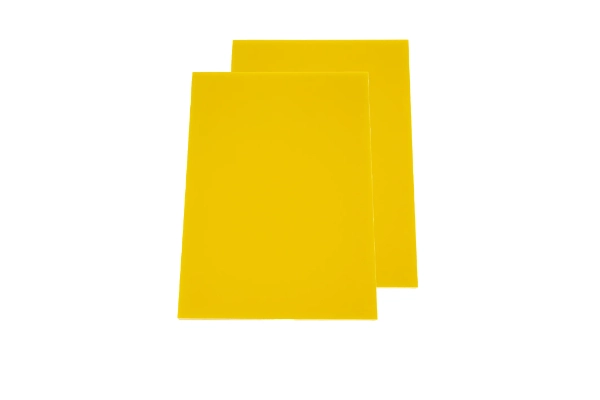
FR4 is a composite material made of woven fibreglass cloth and an epoxy resin binder that is flame-resistant ("FR" stands for "Flame Retardant"). It is classified under the NEMA (National Electrical Manufacturers Association) standards and is widely known for its mechanical strength, electrical insulation capabilities, moisture resistance, and thermal stability. When enhanced for high insulation purposes, FR4 sheets deliver superior dielectric properties that are crucial for high-voltage applications such as those found in substations.
The typical properties of high insulation FR4 sheets include:
- Dielectric strength exceeding 20 kV/mm.
- High mechanical strength with flexural strengths around 480 MPa.
- Low water absorption (typically <0.10%).
- Thermal resistance up to 130°C (continuous operation).
- Excellent flame retardancy, achieving UL94 V-0 ratings.
These properties make high insulation FR4 sheets indispensable in environments where electrical isolation and mechanical robustness are non-negotiable.
Critical Role of FR4 Fibreglass Sheet in Substation Environments
Substations are characterized by:
- High-voltage equipment (switchgear, transformers, busbars).
- Potential exposure to environmental moisture and contaminants.
- Mechanical vibrations and stresses due to heavy machinery.
- Requirements for long-term reliability without frequent maintenance.
In this context, the high insulation FR4 fibreglass sheet serves multiple essential functions:
1. Electrical Insulation
Substations deal with voltages that can range from a few kilovolts (kV) to several hundred kilovolts. Effective electrical insulation is crucial to prevent arc flashes, short circuits, and unintended energy paths that can cause catastrophic failures. High insulation FR4 sheets provide excellent dielectric strength, forming barriers that isolate live components, minimizing the risk of faults and enhancing the safety of both personnel and equipment.
Applications include:
- Insulating barriers in switchgear.
- Mounting bases for circuit breakers.
- Insulation panels in control cabinets.
- Partition walls between conductors.
2. Thermal Management
Electrical currents generate heat, and temperature variations can degrade materials over time. FR4 sheets maintain their mechanical and electrical properties across a broad temperature range. The epoxy resin matrix resists thermal degradation, while the fibreglass reinforcement ensures dimensional stability. In high-load situations, the ability of FR4 to withstand heat without warping or cracking is critical for maintaining insulation integrity.
Substations often experience ambient temperature fluctuations, and operational hotspots around transformers and busbars make thermal endurance an essential material requirement.
3. Mechanical Stability
Substations are subjected to mechanical stresses due to operational dynamics, seismic activity, and installation or maintenance procedures. High insulation FR4 sheets exhibit excellent flexural and tensile strength, allowing them to endure mechanical impacts, vibrations, and load-bearing demands without deformation. Their rigidity helps maintain precise alignments between components, reducing mechanical fatigue and enhancing system longevity.
4. Moisture and Environmental Resistance
Outdoor substations or poorly controlled indoor environments expose materials to humidity, chemical vapors, and particulate contaminants. The low water absorption rate of high insulation FR4 sheets means they maintain their electrical insulating properties even in high-moisture environments. This resistance extends to chemicals and oils commonly present in substations, further preserving the reliability of critical insulation systems.
Moisture ingress is a major cause of dielectric breakdown in many materials, but high insulation FR4 remains robust and reliable, offering longer service life compared to many alternatives.
5. Fire Safety
Fire hazards in substations pose a grave threat to infrastructure and human life. The flame-retardant properties of high insulation FR4 sheets (UL94 V-0 certified) mean they inhibit combustion and do not propagate fire, helping to localize and minimize damage during fire incidents. In designs where safety standards are stringent, the choice of inherently flame-resistant materials like FR4 becomes a regulatory as well as a functional necessity.
Advantages Over Alternative Materials
While alternative insulation materials such as ceramics, phenolic laminates, or newer polymer composites are available, high insulation FR4 fibreglass sheets offer a unique balance of properties at a competitive cost. Key advantages include:
- Cost Efficiency: FR4 offers high performance without the prohibitive costs associated with specialized ceramics or exotic polymers.
- Ease of Fabrication: FR4 sheets can be easily cut, machined, and drilled to precise dimensions, facilitating custom fabrication and on-site modifications.
- Versatile Design: Available in various thicknesses and formats, FR4 sheets support diverse design requirements, from rigid insulator plates to complex three-dimensional insulating structures.
- Proven Track Record: Decades of successful deployment in critical applications lend confidence to engineers specifying FR4 for modern substations.
Conclusion
High insulation FR4 fibreglass sheets are a cornerstone material in the construction and operation of substations. Their outstanding balance of dielectric strength, mechanical stability, thermal endurance, moisture resistance, and fire retardancy uniquely positions them as a preferred choice for insulation and structural support. As the power distribution landscape becomes increasingly sophisticated and demanding, the role of FR4 will only grow in importance.