

 Informazioni
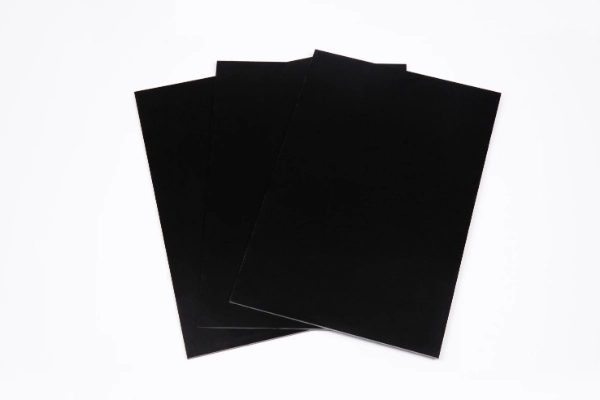
Epoxy resin laminates are foundational materials across various high-performance industries, especially in electronics, aerospace, and power systems. Among these, FR5 epoxy resin laminates hold a prominent position due to their exceptional mechanical strength, flame retardancy, and thermal resistance. In this blog post, as a cost-effective epoxy glass cloth laminated sheet seller, Blue Sun will share high temperature resistant FR5 epoxy resin laminate mechanical properties.
Overview of FR5 Epoxy Resin Laminate
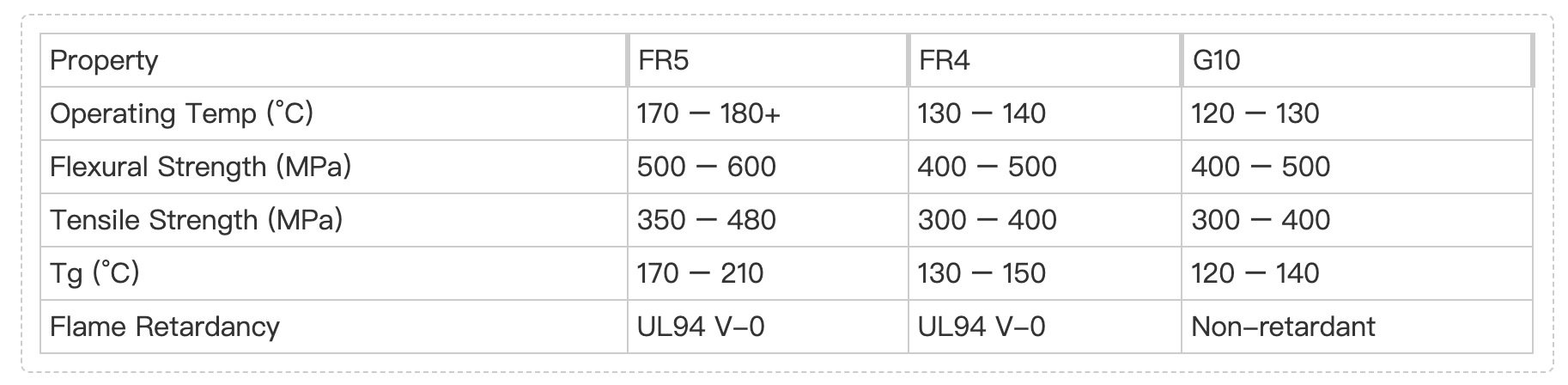
FR5 is a grade of fiberglass-reinforced epoxy laminate, closely related to the more commonly known FR4. However, FR5 is specially formulated to withstand higher operating temperatures, often exceeding 170°C continuous operating temperature with thermal endurance ratings up to 180°C or more, depending on the specific resin system and reinforcement architecture used. It complies with NEMA (National Electrical Manufacturers Association) standards, particularly NEMA Grade FR5, and exhibits UL 94 V-0 flame retardancy.
The material is manufactured by impregnating woven glass cloth (typically E-glass) with a modified, brominated epoxy resin and curing it under high heat and pressure. The result is a dense, rigid, and dimensionally stable thermoset laminate.
Key Mechanical Properties of FR5 Epoxy Resin Laminate
Understanding the mechanical behavior of FR5 is crucial for engineers designing for high-stress and high-temperature environments. Below are the critical mechanical properties evaluated using ASTM or IEC testing standards:
1. Tensile Strength
- Definition: Tensile strength refers to the maximum stress that the material can withstand while being stretched or pulled before failure.
- Typical Value (Room Temperature): 350 – 480 MPa (MegaPascals)
- Test Method: ASTM D3039 / ISO 527
The high tensile strength of FR5 laminates is attributed to the tight bonding between the epoxy matrix and the woven fiberglass cloth. This makes FR5 particularly effective in structural support components where both longitudinal and transverse loading is a concern. Notably, at elevated temperatures (above 150°C), tensile strength tends to decrease, but FR5 retains more than 70% of its room-temperature strength at 180°C, which is a substantial improvement over FR4.
2. Flexural Strength and Modulus
- Definition: Flexural strength is the ability of the laminate to resist deformation under load in a bending mode.
- Typical Flexural Strength: 500 – 600 MPa
- Flexural Modulus: 18 – 22 GPa
- Test Method: ASTM D790
Flexural performance is critical for circuit board applications where the material may undergo deflection during handling or thermal cycling. FR5 demonstrates robust flexural strength even after exposure to high temperatures and moisture conditioning, making it suitable for multilayer printed circuit boards (PCBs), insulation barriers, and high-voltage structures.
3. Compressive Strength
- Definition: Compressive strength measures the material's ability to resist loads that would reduce size.
- Typical Value: 300 – 400 MPa
- Test Method: ASTM D695
Compressive strength is another important metric, especially in applications involving mechanical fasteners, clamps, or press-fit components. FR5 maintains a consistent compressive strength profile over time, with only minor degradation after prolonged thermal aging.
4. Shear Strength (Interlaminar)
- Definition: Interlaminar shear strength evaluates the bond integrity between the resin and reinforcement layers.
- Typical Value: 25 – 35 MPa
- Test Method: ASTM D2344
Because of the strong adhesion between the epoxy resin and fiberglass, FR5 exhibits excellent resistance to interlaminar shear failure. This makes it ideal for sandwich structures, multilayer assemblies, and PCB environments where delamination resistance is essential.
5. Impact Strength (Izod and Charpy)
- Izod Impact Strength (Notched): 12 – 18 kJ/m²
- Charpy Impact Strength (Unnotched): 25 – 40 kJ/m²
- Test Method: ASTM D256 / ISO 179
Impact resistance in FR5 is moderate, as expected for glass-reinforced thermoset composites. While not designed for high-impact applications like some thermoplastics, FR5 does offer adequate toughness to withstand mechanical shocks during operation or transport.
6. Hardness (Rockwell and Barcol)
- Rockwell Hardness (M Scale): 110 – 120
- Barcol Hardness: 50 – 55
- Test Method: ASTM D785 / D2583
FR5's high surface hardness ensures excellent wear resistance, especially when used in mechanical or sliding contact environments. This makes it well-suited for insulating gaskets, structural spacers, and other wear-prone components.
7. Creep Resistance and Fatigue Strength
FR5 exhibits low creep deformation under continuous load, which is essential for long-term dimensional stability in hot environments. Its fatigue strength, although not as extensively documented, is significantly higher than that of FR4 when subjected to cyclic loading at elevated temperatures. This characteristic enhances its durability in dynamic systems.
8. Thermal Mechanical Behavior
- Glass Transition Temperature (Tg): 170°C – 210°C
- Coefficient of Thermal Expansion (CTE):
- In-plane: ~10 – 18 ppm/°C
- Through-thickness: ~50 – 70 ppm/°C
- Thermal Conductivity: ~0.3 – 0.5 W/m·K
Mechanical properties remain stable near and just above Tg, which distinguishes FR5 from lower-grade laminates. In contrast to FR4 (Tg around 130–140°C), FR5’s higher Tg allows it to maintain mechanical rigidity and dimensional stability in environments with persistent thermal cycling or reflow soldering exposure.
9. Moisture Absorption and Environmental Resistance
- Water Absorption (24 hrs @ 23°C): ≤ 0.10%
- Effect on Mechanical Properties: Minimal under controlled conditions
- Hydrothermal Aging Resistance: Excellent
FR5 demonstrates low moisture uptake, which contributes to the stability of its mechanical properties over time. In humid or chemically aggressive environments, such as aerospace or offshore applications, this laminate shows excellent retention of mechanical performance and electrical insulation capabilities.
Application Implications of Mechanical Properties
The above mechanical properties directly impact the usability and reliability of FR5 epoxy laminates in various high-end sectors:
- Aerospace: Structural integrity under dynamic mechanical loads and thermal gradients is critical. FR5's strength and stability make it ideal for circuit boards, enclosures, and insulation barriers.
- Power Systems: In transformers and switchgear, mechanical strength at elevated temperatures ensures safety and longevity.
- Industrial Automation: FR5 is widely used in robotic and automated systems where vibration and thermal cycling are prevalent.
- Automotive Electronics: With increasing demands for thermal and mechanical robustness in electric vehicles (EVs), FR5 supports the mechanical stability of power conversion systems and battery management modules.
Comparative Analysis with FR4 and G10
Conclusion
FR5 epoxy resin laminate is a high-performance, mechanically robust material engineered for applications that demand both thermal resilience and structural integrity. Its superior tensile, flexural, and compressive strengths—maintained even at elevated temperatures—make it a material of choice for engineers seeking reliability and performance in harsh operating environments.
Understanding these mechanical properties is not just a matter of material specification but a cornerstone of reliability engineering, particularly in domains where failure is not an option. When high temperatures meet high mechanical demands, FR5 epoxy resin laminates stand out as a tried-and-tested solution.
If you need assistance with selecting the appropriate FR5 grade for your application or need testing standards and datasheets for mechanical characterization, feel free to reach out or consult with a certified laminate manufacturer or material testing lab.